If you replace a 2 prong outlet with a 3 prong outlet and change nothing else, you haven’t grounded anything. The slots changed. The wiring didn’t. Per a home inspector trade association’s guide, a three-slot receptacle on a circuit with no path to ground can be more dangerous than an adapter. It appears to be grounded. The fixes that guide lists are a correctly grounded circuit, GFCI protection labeled as having no equipment ground, or two-slot receptacles again. Each one is a qualified electrician’s job.
That is the part that follows the house. A later owner, or an appliance plugged into that wall, may trust a ground that isn’t there. So this article states no electrical-code requirement, and it gives no wiring steps. Some readers come looking for steps. This one has none. It’s general information, not electrical or legal advice.
What Happens If You Replace a 2 Prong Outlet With a 3 Prong Outlet?
You get a receptacle that fits three-pronged plugs. That’s all. Per a home inspector trade association’s guide to ungrounded receptacles, a three-slot receptacle put in without re-wiring a path to ground is potentially more dangerous than an adapter. The guide says it appears to be grounded, so future owners might never be aware their system isn’t grounded.
That same guide treats the three-slot version as an upgrade only when it’s wired so it’s correctly grounded. It also says homeowners and non-qualified people should never attempt to modify a building’s electrical components. That’s why this article has no steps in it. The question sits behind the wall, not on it. Does the circuit have a path to ground? An outlet’s shape alone can’t tell you. A qualified electrician can look at the circuit behind it.
Which rules apply to a given house can depend on the municipality and on when the work was done. That question belongs to your local code office. Ask them what applies to the house you’re buying.
What Does the Ground Slot Do?
Per the guide, a modern grounded receptacle has a small, round ground slot below its two vertical slots. That slot provides an alternate path for electricity that may stray from an appliance. The guide says grounding has been required in new construction since 1962. Older homes, it says, often have ungrounded receptacles it calls outdated and potentially dangerous.
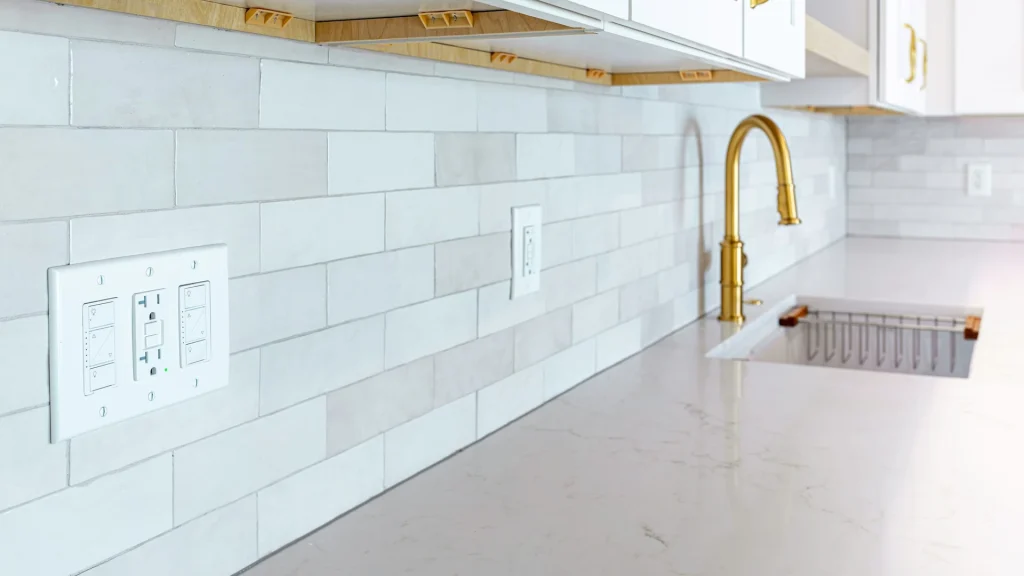
So the slot does that job only if the circuit behind it has a path to ground. A slot with nothing behind it is a shape, not a protection. A three-slot outlet can be correct. It can also be cosmetic. You can’t read a circuit from a cover plate, and the face of the outlet doesn’t say which one you have.
The guide adds one related point: in a building still wired with knob-and-tube, any three-slot receptacles are likely ungrounded. Our post on knob-and-tube wiring explains that wiring for buyers. That’s as far as this article goes on it.
What Are the Options for an Ungrounded Circuit?
The guide lists three ways to bring an ungrounded system closer to modern safety standards. None of them is a homeowner project. The guide says adjustments to an electrical system should be made by qualified electricians, not homeowners.
- Three-slot receptacles wired so they’re correctly grounded.
- Ground-fault circuit interrupters (GFCIs), installed upstream or at the receptacle itself.
- Two-slot receptacles in place of three-slot ones, which correctly represent that the system is ungrounded.
The guide calls GFCIs an accepted replacement because they protect against electric shock even without grounding. It adds two limits. GFCIs may not protect the powered appliance. And GFCI-protected ungrounded receptacles may not work effectively with surge protectors. The guide says those receptacles should be identified with labels that state “No Equipment Ground.”
Our post on where GFCI protection is required covers the spots in a home where that protection applies. This article doesn’t repeat it, and it sets out no code rule of its own.
Which option suits a given house is a qualified electrician’s call. Ask for the choice and the reason in writing. That’s a record you can hand to the next person who asks. This article names no price and no timeline for any of it.
Does Every Two-Slot Outlet Need to Be Replaced?
Not necessarily. The guide says upgrades are not necessarily required, because many small electrical appliances, such as alarm clocks and coffee makers, are two-pronged. A lack of grounding in the building’s electrical system doesn’t affect them. The guide still says that upgrading the system brings it closer to modern safety standards.
Whether a particular house needs to change anything is a separate question. It turns on the municipality’s rules and on what a qualified electrician finds in the house. This article can’t answer either one, and the code office is the place to ask about the first.
The guide also flags two shortcuts. One is the adapter, or cheater plug, which permits ungrounded operation of an appliance built for grounded operation. The guide calls that a cheaper alternative to replacing ungrounded receptacles, and less safe than properly grounding the connected appliance. The other is an attempt to ground a receptacle to a metallic water line or a ground rod. The guide says misguided attempts of that kind may be dangerous.
What to Ask Before You Buy a House With Two-Slot Outlets
Picture a showing where the outlets in the kitchen have two slots. Three questions are worth putting in writing before the contingency clock runs out. Which outlets are two-slot? What will the written inspection report note about them? And what does a qualified electrician say about the circuits behind them? Don’t swap anything before the electrician has looked, because the guide says homeowners shouldn’t modify a building’s electrical components.
A three-slot outlet already in the wall isn’t proof of a ground either. Someone may have changed it. The guide’s knob-and-tube point is one reason to ask about the circuit rather than the receptacle sitting on it.
Questions about the agreement of sale go to your real estate agent. Ask how an electrical finding fits the agreement you signed. That part isn’t ours to answer.
Frequently Asked Questions About 2 Prong Outlets
Can you use an adapter on a 2 prong outlet?
The guide says adapters permit the ungrounded operation of appliances designed for grounded operation. It calls them a cheaper alternative to replacing ungrounded receptacles, and less safe than properly grounding the connected appliance. So an adapter can power a three-pronged appliance. By the guide’s own description, that’s still ungrounded operation. The guide says changes to an electrical system belong to qualified electricians.
Does a GFCI outlet make a 2 prong circuit grounded?
No. The guide says a GFCI protects against electric shock even in the absence of grounding, but it may not protect the powered appliance. It also says GFCI-protected ungrounded receptacles may not work effectively with surge protectors, and that they should carry labels stating “No Equipment Ground.” It’s an accepted replacement, the guide says, because it protects against shock where there is no grounding. That choice belongs to a qualified electrician.
Are two-prong appliances a problem on a two-slot outlet?
The guide says many small electrical appliances, such as alarm clocks and coffee makers, are two-pronged and are unaffected by a lack of grounding in the building’s electrical system. That’s why it says upgrades are not necessarily required. The same guide says upgrading the system brings it closer to modern safety standards, and that the work belongs to qualified electricians.
Can you ground an outlet to a water pipe?
The guide says misguided attempts to ground receptacles to a metallic water line or a ground rod may be dangerous. It also says homeowners and non-qualified people should never attempt to modify a building’s electrical components. This article gives no method, no tools and no steps. That’s deliberate. Put the question to a qualified electrician and ask for the answer in writing.
Who should replace a 2 prong outlet?
A qualified electrician. That’s the guide’s own summary: adjustments to an electrical system should be made by qualified electricians rather than homeowners. It also says homeowners and non-qualified people should never attempt to modify a building’s electrical components. What rules apply to your own house is a question for your local code office. This article states no code requirement.
Know What the House Has Before You Close
Inspection Professionals’ written report documents every finding with photographs and is delivered within 24 hours, so you can see the evidence for each finding rather than a summary.
During an inspection, one of our licensed inspectors performs a visual examination of the structure and all major systems, then documents every finding with photographs so nothing is left to guesswork. The report grades every system and flags items that need immediate attention or future monitoring. It’s a record of what the inspection found, and that gives you something specific to bring to an electrician or your agent. What you do with the findings is up to you.
A full home inspection is the written report to have in hand while you ask.
If you’re buying in Bucks County, Montgomery County, Philadelphia or Delaware County, contact Inspection Professionals to talk through what a full home inspection documents before you replace a 2 prong outlet with a 3 prong outlet or buy a house that has them.